WU-FARU Forensic Anthropology Training Courses
The Washburn University Forensic Anthropology Recovery Unit offers specialized training courses specifically in forensic anthropology for professionals and students (18+ years). These courses range from one day up to two weeks and cover both the recovery/field components of the discipline, as well as, the laboratory components including human osteology, the biological profile, trauma/taphonomy, and pathology. Courses are taught by board-certified forensic anthropologist Dr. Alexandra R. Klales, D-ABFA (#123), with guest lectures from other prominent forensic and biological anthropologists. Continuing education credits (e.g., ABMDI or MO Post) are available for some courses.
Courses can be customized and privately scheduled for groups of ten or more. All courses are taught on the Washburn University campus in the joint Washburn University & Kansas Bureau of Investigation’s innovative Forensic Science Center Building (2001 SW Washburn Ave) in Topeka, KS unless otherwise specified below. Courses are not offered for university credit; however, participants will earn a signed/dated certificate of completion documenting the course name and hours. For more information, contact (785) 670-1611 or alexandra.klales@washburn.edu.
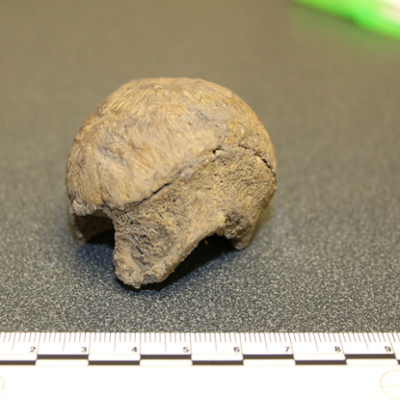
Identifying Human vs. Non-Human Bone
2026 Course Canceled Due to Low Enrollment
1-day course offered in 2 modalities (in-person $150 or and synchronously online $100)
In Person: This course is designed for law enforcement officers and crime scene investigators that often need to distinguish human from non-human bones. This one-day course will include lectures, hands-on practicals, mini quizzes, and question/answer sessions that will demonstrate how to differentiate human skeletal remains from non-bone materials and from non-human bones. No prior knowledge of human osteology is required.
Online: This online, synchronous course is designed for law enforcement officers and crime scene investigators that often need to distinguish human from non-human bones. This one-day course will include live lectures/Q&A sessions with Dr. Klales, online laboratory practicals, and mini-quizzes that will demonstrate how to differentiate human skeletal remains from non-bone materials and from non-human bones. No prior knowledge of human osteology is required.
Online course requirements:
- device (tablet, smartphone, computer, etc.) with reliable internet, microphone, and camera (only required for CE credits)
- free Zoom account (available here: https://zoom.us/)
- valid email address to be added to the online course module hosted via the Washburn website (Brightspace Desire2Learn)
This course has been approved for 6.5 hours of ABMDI and 7.5 hours of MO POST Continuing Education (CE) Hours in the past.
Sample course schedule for Identifying Human vs. Non-Human Bone
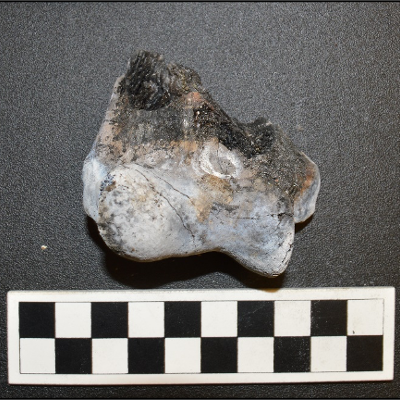
Human Osteology
June 16-19, 2026 from 8am to 5pm (in-person) in Topeka, KS (Cost $550)
4-day course offered in-person only ($550)
The goal of this short course is to familiarize students and professionals with the identification of human skeletal remains. Emphasis will be placed on identifying and siding fragmentary human bone, recognizing sub-adult remains, and understanding human skeletal anatomy. Participants will be introduced to normal human variation, as well as, taphonomic and pathological changes. The course involves extensive hands-on opportunities with real bone fragments, supplemented by detailed lectures, presentations, and actual forensic case studies. No osteological experience required; however, you may want to consider (i.e., optional) purchasing the following reference text: White & Folkens (2005) The Human Bone Manual (~$30)
This course has been approved for 35 hours of ABMDI and 38.35 hours of MO POST Continuing Education (CE) Hours in the past.
Applying MorphoPASSE to Forensic Casework
June 5, 2026 from 8am to 5pm (online synchronous) (Cost $125)
1-day course offered synchronously online only ($125)
This online, synchronous (i.e., live) course is designed for forensic anthropologists, diplomates, and students (graduate and undergraduate) that use the MorphoPASSE (Morphological Pelvis and Skull Sex Estimation) Program to estimation skeletal sex in forensic casework. This one-day course will include live lectures/Q&A sessions with MorphoPASSE creator Dr. Klales, online laboratory practicals (using bone images and/or 3D models), case examples, and mini-quizzes that will demonstrate how to score the MorphoPASSE traits and analyze forensic cases in the program. Upon successful completion of the final case exam, participants will be provided with a competency training certificate documenting hours and proficiency in use of the program. No prior knowledge of MorphoPASSE is required.
Online course requirements:
- device (tablet, smartphone, computer, etc.) with reliable internet, microphone, and camera (only required for CE credits)
- free Zoom account (available here: https://zoom.us/)
- valid email address to be added to the online course module hosted via the Washburn learning management website (Brightspace Desire2Learn)
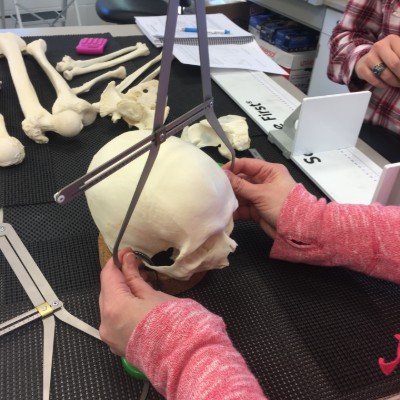
Human Skeletal Biology: Estimating the Biological Profile
June 1-15, 2026 (online asynchronous) (Cost $450)
5-day course offered in two modalities (in-person $750; synchronously online $650) and a 2-week course offered asynchronously (i.e., self-paced) online only ($450)
This either short course is designed to familiarize students and professionals with the current methods used to estimate the biological profile (age, sex, ancestry, stature) of unknown individuals from their skeleton. Participants will be introduced to the classic and newest morphological and metric methods of identification for each biological profile parameter. Some topics to be covered include osteometrics/digitizing, using and interpreting Fordisc, the Walker (2008) and Klales et al. (2012) sex methods, the Hartnett (2010) rib and pubis age methods, and newer programs like DSP, hefneR, Transition Analysis, and MorphoPASSE. This course does not require previous osteological experience, but participants will get the most out of the course if they have some familiarity of the bones and features beforehand.
In-Person: This hands-on course will contain lectures and structured laboratory modules that utilize real human remains from the Washburn Osteology Collection for participants to learn and apply the methods covered in the course.
Online Synchronous: This course requires synchronous web-delivery of lectures, breakout sessions/discussions, and Q&A sessions. Laboratory modules are completed asynchronously online at designated times using 3D bone models, real forensic case photos, and simulations. Dr. Klales will be available via online chat and/or Zoom to answer questions during the asynchronous lab modules.
Online Asynchronous: The course involves asynchronous web-delivery of readings and lectures videos recorded by Dr. Klales. Online laboratory modules allow for practical application of the materials using 3D bone models, real forensic case photos, and simulations. Dr. Klales will be available via online chat and/or Zoom calls at pre-determined times for assistance throughout the course; however, the course is designed so that participants in any time-zone or region can complete the course at their own pace over the two-week offering. The course must be fully completed by the course deadline to earn a completion certificate.
Online course requirements:
- device (tablet, smartphone, computer, etc.) with reliable internet, microphone, and camera (only required for CE credits)
- free Zoom account (available here: https://zoom.us/)
- valid email address to be added to the online course module hosted via the Washburn website (Brightspace Desire2Learn)
This course has been previously approved for 33 hours of ABMDI and MO POST Continuing Education Hours- 2021 CE hours in the past.
Sample course schedule for Human Skeletal Biology: Estimating the Biological Profile